Yes, it is possible to soft wash a house while minimizing or avoiding bleach, but there are tradeoffs. Many professional soft washing services use sodium hypochlorite (a bleach derivative) because it effectively kills mold, mildew, and algae at the source. Alternative, lower-chemical solutions exist, but results can vary depending on what is growing on your home’s exterior.
A homeowner recently called us at Clearview Washing asking about soft washing their home, detached garage, wood porch, and patio furniture. Before wrapping up, she made a point to mention she wanted to avoid bleach. It is a question we hear more often than you might think, and it deserves a straight answer.
We are based in Freehold, NJ, and we have washed hundreds of homes across Monmouth County. We understand why some homeowners are cautious about certain cleaning agents, especially around wood surfaces, gardens, metal furniture, and pets. Here is what you actually need to know.
Why Do Most Soft Wash Companies Use Bleach-Based Solutions?
Sodium hypochlorite, the active ingredient in most soft wash mixes, is used because it does not just remove organic growth, it kills it. Mold, mildew, algae, and lichen all have root systems that cling to siding, wood, and masonry. Rinsing alone or using a surfactant without a biocide leaves those roots behind, which means the growth comes back faster.
That said, professional-grade soft wash solutions are diluted significantly before application. The concentration used on a house exterior is far lower than what comes out of a bleach bottle. When applied correctly by a trained technician, it is safe for most surfaces, plants, and pets.
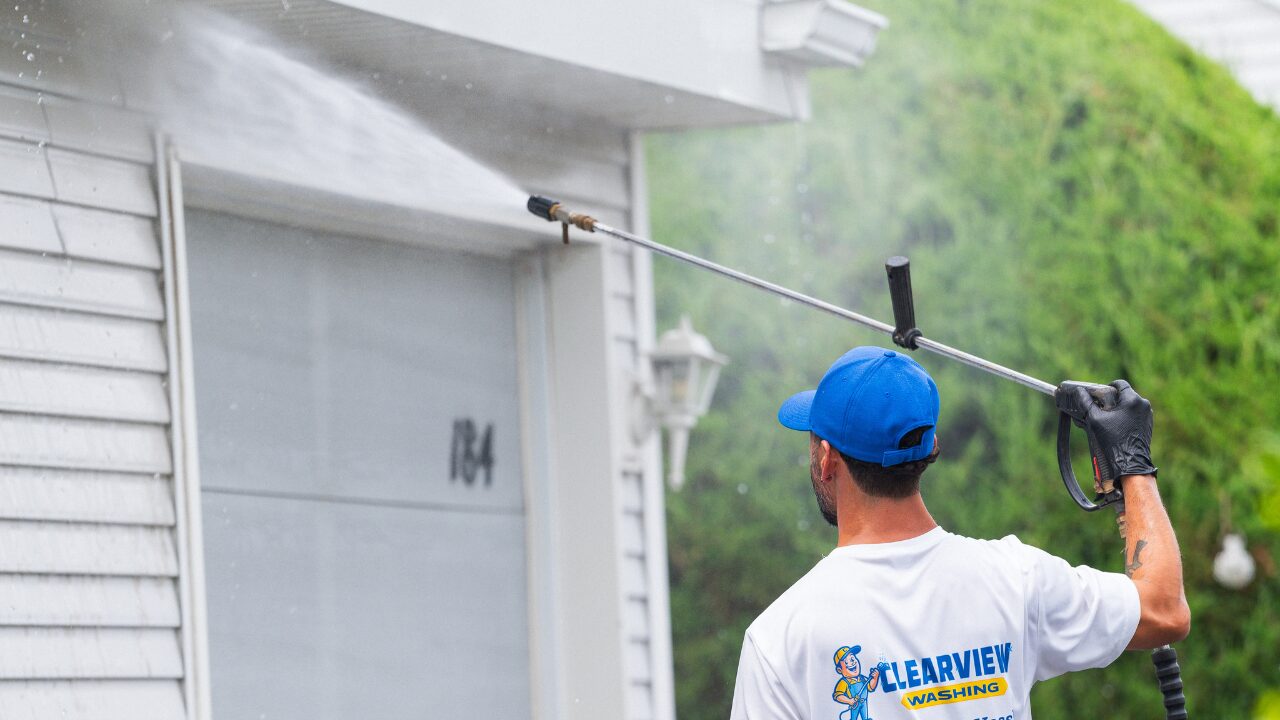
This is very different from pressure washing, which uses high-force water instead of chemistry. Our soft washing and power washing services are tailored to the surface being cleaned, not a one-size-fits-all approach.
What Are the Alternatives to Bleach in Exterior House Washing?
There are biodegradable and plant-based cleaning agents that can reduce or replace bleach in a soft wash mix, though they work best on light to moderate organic buildup. Some examples include hydrogen peroxide-based cleaners, citric acid solutions, and enzyme-based surfactants.
Here is a realistic breakdown of what to expect with bleach-free options:
Light dirt and dust: Bleach-free solutions typically work well here
Light mildew or green algae: Some plant-based biocides can handle this with proper dwell time
Heavy mold, black algae, or lichen: These almost always require a sodium hypochlorite-based solution for full removal and lasting results
Wood surfaces like porches: Lower-strength or specialty wood-safe solutions are available and preferred
Metal patio furniture: Gentle surfactants and low-pressure rinses are usually the right call here
The honest answer is that if you have significant organic growth, going fully bleach-free may mean the results do not last as long. We would rather tell you that upfront than overpromise.
Is Soft Washing Safe for Wood Porches and Metal Patio Furniture?
Wood porches and metal furniture both require a more careful approach than vinyl siding or concrete, and a good technician will adjust the solution strength and pressure accordingly. Wood is porous and can absorb too much moisture or chemical if not handled properly. Metal can corrode or discolor if exposed to harsh agents.
For a wood porch attached to a house, we typically use a wood-safe cleaner at lower concentrations. The goal is to lift grime and kill surface growth without raising the grain of the wood or stripping any staining or sealant that is already there.
For metal patio furniture, we lean toward gentle surfactants and a soft rinse. It is less about heavy cleaning chemistry and more about careful application. Most metal outdoor furniture responds well to this approach without any damage.
Our house washing service takes all of these surface differences into account before we ever mix a solution or start a job.
Should You Tell Your Soft Wash Company About Your Bleach Concerns Before the Job?
Absolutely, and the earlier you mention it, the better. A reputable company will factor your preferences into the estimate and be transparent about what is and is not achievable with lower-chemical methods.
When the homeowner who called us flagged her bleach concern, our team added a note to her request right away so it would be visible to the technician assessing her property. That kind of communication upfront prevents surprises on job day and helps us match the right solution to the right surfaces.
If a company dismisses your concern entirely or says there is only one way to do it, that is a red flag. A good soft wash provider has options and will walk you through them honestly.
You can learn more about who we are and how we approach each job on our about page. We have been doing this long enough to know that trust starts before the first drop of solution hits your siding.
What Questions Should You Ask Before Booking a Soft Wash Estimate?
Asking the right questions before you book can save you frustration and protect your property. Here are the ones that matter most if you have concerns about cleaning solutions:
What specific solutions do you use, and what are the concentrations?
Do you offer lower-chemical or bleach-free alternatives for sensitive surfaces?
How do you protect plants, landscaping, and outdoor furniture during the wash?
What surfaces are included in the house wash quote, and are wood and metal priced separately?
Will the technician doing the job be aware of my surface-specific concerns before they arrive?
These are not difficult questions for a qualified company to answer. If someone hesitates or gets vague, keep looking.
Frequently Asked Questions
Can soft washing damage my wood porch?
It can, if done incorrectly. Wood is sensitive to both high pressure and harsh chemicals. A properly trained soft wash technician will use a wood-appropriate solution at low concentrations and avoid any pressure that could raise the grain or force moisture into the wood. Always ask your provider specifically how they handle wood surfaces before they start.
Will bleach-free soft washing kill mold and mildew, or just clean the surface?
It depends on the product and the severity of the growth. Some plant-based biocides can kill light mold and mildew on contact. However, heavy infestations usually require sodium hypochlorite to fully eliminate the root system. If you go bleach-free on a heavily affected surface, expect more frequent re-cleaning.
Is soft washing safe around pets and garden beds?
When handled professionally, yes. Technicians typically pre-wet surrounding plants before applying solution and rinse the area thoroughly afterward. Pets should be kept indoors during the wash and for a short time after until surfaces are fully rinsed and dry. If you have specific concerns about a sensitive garden or a pet with skin sensitivities, mention it before the estimate so the team can plan accordingly.
Do you soft wash detached garages and outbuildings?
Yes. Detached garages are a common add-on to house washing jobs. The process is similar to washing the main house, though the technician will assess the siding material and any specific conditions before applying solution. Getting the garage done at the same time as the house is usually more cost-effective than scheduling it separately.
Ready to Get a Soft Wash Estimate in Freehold, NJ?
If you have questions about what solutions we use, how we handle wood or metal surfaces, or whether we can work around your specific concerns, we are happy to talk through it before you commit to anything.
Homeowners throughout Freehold, NJ and the surrounding Monmouth County area trust us to show up, communicate clearly, and do the job right. Whether it is your main house, a detached garage, a wood porch, or patio furniture, we will give you an honest assessment and a clear proposal.
Request a free estimate today and let us know upfront what your concerns are. We will make sure the right notes are on file before anyone sets foot on your property.